Why itching is not proof
Many people think of bed bugs as soon as they itch or see red bumps. Yet skin symptoms on their own say nothing about which insect was responsible. Other causes give similar reactions.
What is more, not everyone reacts in the same way. Some people notice nothing at all, while others have many complaints. Looking only at the skin is therefore not a reliable method.
If you want certainty, the place itself has to be checked: the bed, the seams and the immediate surroundings.
Clues around the bed
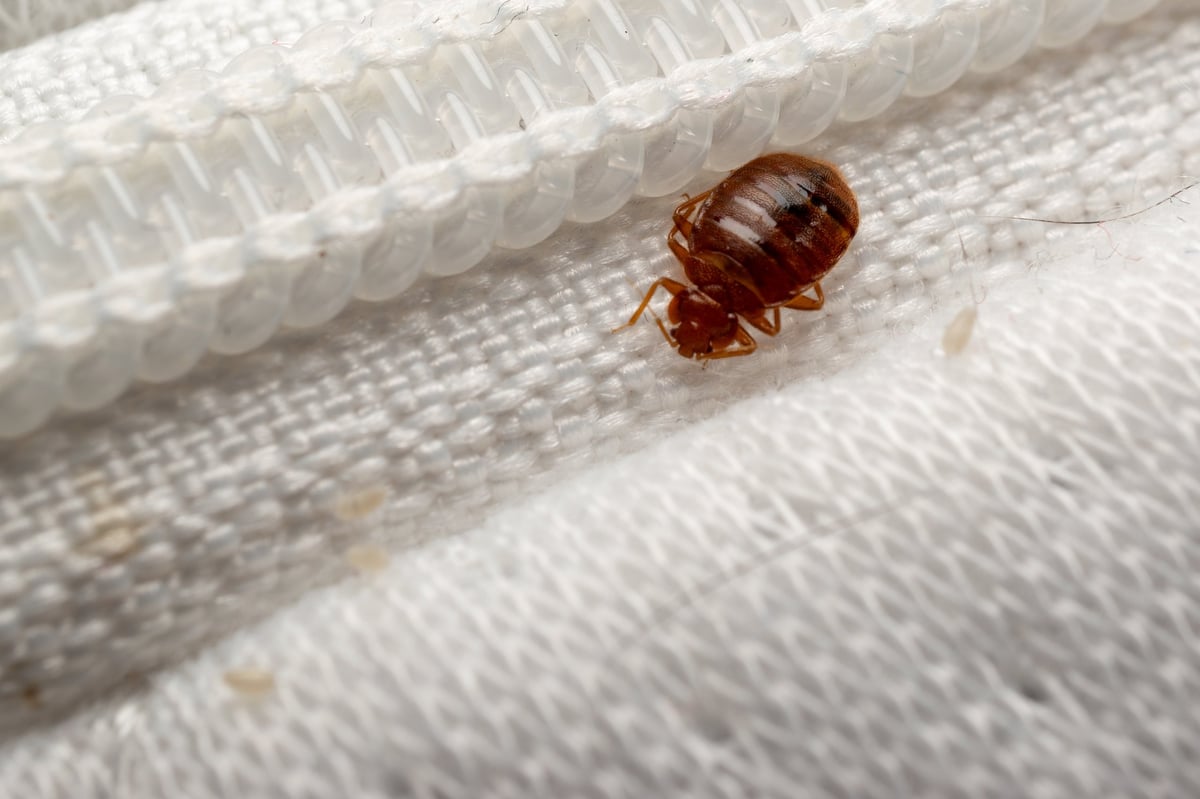
Look in the hem of the mattress, along zips and in the corners of the bed frame. That is where bed bugs prefer to hide.
Watch for small dark dots or rusty-brown spots in the seams of the fabric. These can be droppings or traces of an earlier meal.
Shed skins also occur. They are translucent to light brown and look like the empty casing of a small insect.
Smell and other signs
In a room that has been closed for a long time, a distinctive sweet, musty smell may linger. That smell appears when many bed bugs are present.
Sometimes you find small eggs or clusters of eggs in a gap by the skirting board or behind the bedside table.
Spots on sheets or in the corners of a freshly made bed are also a reason to look more closely.
Why an inspection is needed
From what you see yourself, it is often not possible to say with certainty whether it is bed bugs. Other insects also occur around a sleeping place.
An inspection maps out whether it really is bed bugs and how far the situation has spread. That information determines which approach is needed and which preparation goes with it.
Without that picture treatment is often ineffective, because the hiding places are missed.
What you should not do
Do not throw away your mattress without discussing it. A mattress that is moved or transported can actually spread the situation to other rooms.
Do not move furniture to other rooms before the situation has been assessed. You may well move the problem with it.
Do not start yourself with shop-bought products without knowing where the hiding places are. That makes it harder later to establish what is going on.
When to get in touch
If you suspect bed bugs, discussing it is the logical first step. Describe what you have seen: where, in which room and since when.
We will then discuss the right next step. In many cases an inspection is needed for certainty before anything is treated.